Choosing a diamond starts with understanding what you're actually looking at. The different diamond cuts on the market each behave differently in light, sit differently on the hand, and suit different ring styles. Some throw sharp, white sparkle, while others give a softer, romantic glow. A few have barely changed in two centuries, while others were designed in the last fifty years to push light performance further.
This guide walks through the cuts you'll come across most often when shopping for an engagement or fine jewellery piece. We'll cover brilliant cuts, cushion cuts, and the modern and fancy shapes that have moved into the mainstream, then talk through how each one translates into a custom design process. By the end, you'll have a clear sense of which direction suits the wearer, the setting, and the look you're after.
The Short Version
-
—Shape is the outline. Cut is the faceting style. They're not the same thing.
-
—Brilliant cuts maximise sparkle. Step cuts produce a clean, mirror-like flash.
- —The round brilliant sparkles the most; ovals and pears look larger per carat.
- — The right cut depends on the setting, the lifestyle, and whether you want size or sparkle.
Diamond Cut vs Diamond Shape: Clearing Up the Terminology
The words cut and shape get used interchangeably in most diamond shopping, but they mean slightly different things in the trade. Shape describes the outline of the stone when you look down at it from above. Round, oval, pear, cushion, emerald, marquise. Cut describes the faceting style, the pattern and angle of the facets that determine how the diamond handles light.
Most diamonds fall into one of two cutting styles:
Brilliant Cuts
Made for Sparkle
Triangular and kite-shaped facets arranged to maximise sparkle and the rapid flash of light known in the trade as scintillation. Round brilliants are the best-known example, but ovals, pears, marquise, hearts and modern cushions all use brilliant faceting.
Step Cuts
Made for Flash
Long, parallel facets that run across the stone like the steps of a staircase. Emerald and asscher cuts are the two main step-cut shapes. They produce a quieter, glassy flash rather than a fiery sparkle.
So when we talk about the different diamond cuts available, we're really talking about the combination of shape and faceting style. A round brilliant and a brilliant-cut oval are both brilliant cuts. An emerald and a baguette are both step cuts. The faceting decides the personality of the stone. The shape decides its silhouette.
The Brilliant Cut: The Most Popular Faceting Style
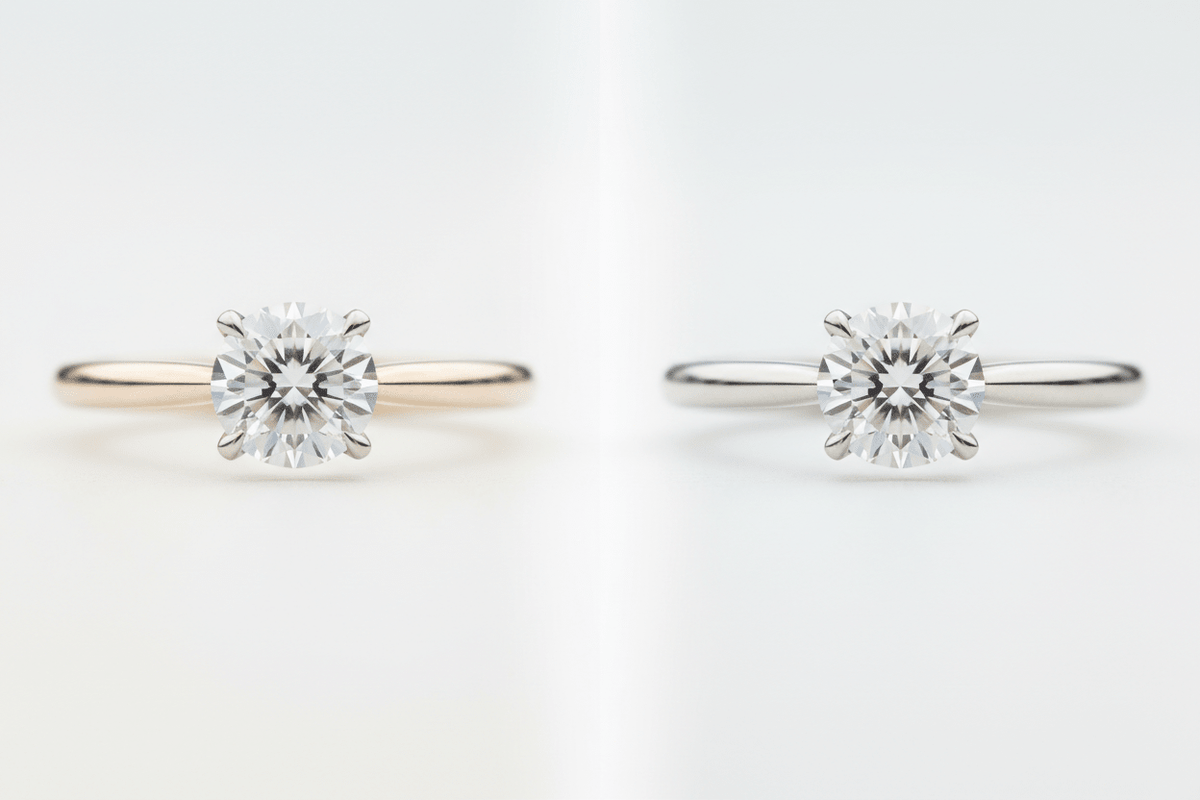
The modern round brilliant is the benchmark almost every other diamond cut is measured against. It typically carries 57 or 58 facets and is engineered to return as much light back through the top of the stone as possible. That's where the white sparkle and coloured fire you see in a well-cut diamond comes from.
For most buyers, the brilliant cut diamond is the safe, classic choice. It's the most studied cut in the industry, which means quality grading is consistent, and you can compare stones across sellers with confidence. It also suits almost every style of setting, from a simple solitaire through to a vintage halo or a contemporary bezel.
A few things worth knowing about brilliant cut diamonds:
- — They hide inclusions well. The dense faceting pattern breaks up light, so small inclusions and slight colour tints are less noticeable than in a step-cut stone of the same grade. That can stretch your budget without compromising on visual quality.
- — They suit lab-grown beautifully. Brilliant cutting is where the optical performance of lab-grown diamonds really shows. The same precision faceting that's been refined for over a century works identically on a lab-grown stone, and you'll see the same fire and scintillation as a mined diamond of equivalent grade.
- — They're versatile across shapes. Brilliant faceting applies to round, oval, pear, marquise, heart and radiant outlines. So if you love the sparkle of a round brilliant but want a different silhouette, you're not giving up the light performance.
The round brilliant remains the most chosen diamond shape for engagement rings, and most of the solitaires in our ready-to-wear collection are round or oval brilliants for that reason.
The Cushion Cut: Soft Edges, Antique Character
Worth Knowing
The cushion is one of the oldest cuts still in regular use, with roots in the old mine cuts of the 18th and 19th centuries. Modern cushions have been re-engineered with brilliant faceting for more sparkle while keeping the softer, romantic silhouette.
The cushion cut diamond is a square or slightly rectangular stone with rounded corners, named for its pillow-like outline. It's one of the oldest cuts still in regular use, with roots in the old mine cuts of the 18th and 19th centuries. Modern cushions have been re-engineered with brilliant faceting to add more sparkle, but they keep the softer, more romantic look that distinguishes them from the round brilliant.
There are two broad styles to know:
- — Cushion brilliant. Faceted in the brilliant style, with a fiery, scintillating sparkle that comes close to a round brilliant. This is the most common modern cushion.
- — Cushion modified brilliant. Has additional facets in the pavilion that create a "crushed ice" or chunky sparkle pattern. Some buyers love this look, others prefer the cleaner flash of a standard cushion brilliant. It’s very much a matter of personal taste, and worth comparing both in person.
Cushion cuts suit buyers who want a presence on the finger without the geometry of a princess cut or the sharpness of a radiant. The rounded corners feel softer, more vintage, and tend to flatter a wide range of finger shapes. They work especially well in halo settings and in pieces with detailed shoulder work, where the rounded corners blend smoothly into the band.
If you're drawn to old-world character but want the light performance of a modern stone, the cushion cut is usually where that conversation lands.
Modern and Fancy Shapes
Anything outside of the round brilliant is technically a fancy shape in trade language. Several of these have moved well into the mainstream and deserve their own look.
Oval
A brilliant-cut elongated round. Ovals look larger than a round brilliant of the same carat weight because the spread across the top is greater, and the elongated shape can make fingers appear longer. It’s no surprise it’s been one of the most requested shapes for custom diamond ring designs in the past few years.
Pear
A teardrop outline with a rounded end and a tapered point. Brilliant faceted, with a graceful, asymmetrical character. Best worn with the point facing the fingernail. The setting needs a protective tip, called a V-prong, to shield the point from chipping.
Emerald Cut
A rectangular step-cut stone with cropped corners. The long parallel facets give it a clear, mirror-like flash rather than a rapid sparkle. Demands high clarity and colour because the open faceting shows everything, but the pay-off is a quiet, elegant look that reads as confident rather than showy.
Asscher Cut
A square step cut with cropped corners and a deeper pavilion. Often described as having a hall-of-mirrors effect when you look into the stone. Art deco in feel, well-suited to clean geometric settings.
Marquise
An elongated shape with two pointed ends. Maximises the visual size of the diamond per carat, which is one of the reasons it had a moment in the 1970s and is finding its way back now. Like the pear, the points need protective prongs.
Radiant
A rectangular or square outline with cropped corners and brilliant faceting. Combines the silhouette of an emerald cut with the sparkle of a brilliant. A perfect choice for buyers who find themselves drawn to both.
Heart
Self-explanatory in outline, brilliant faceted, and one of the more demanding cuts to do well. Symmetry is everything, and a poorly cut heart shows it immediately. Worth seeing in person before committing.
Choosing the Right Cut for Your Custom Diamond Ring Design
Picking a cut for a custom diamond ring design is part personal taste and part practical fit for their lifestyle. A few questions we work through with clients in the studio:
Four Questions Worth Answering First
How is the ring going to be worn? Daily wear under gloves, gardening, hospital scrubs, or a kitchen environment changes what's practical. Pointed cuts like marquise and pear need more protection. Step cuts show finger oils faster than brilliants. Round brilliants are the most forgiving.
What style of setting are you drawn to? A vintage halo wraps beautifully around a cushion or oval. A clean, modern bezel suits an emerald or asscher. A classic solitaire really sings on a round brilliant. The cut and the setting are a single decision, not two.
Do you want size or sparkle? Per carat, elongated shapes (oval, marquise, pear) look larger on the hand than rounds and cushions. If maximum visual size matters, those shapes give you more spread for your budget. If maximum sparkle matters, the round brilliant is still the benchmark.
Lab grown or mined? The same cuts apply to both. Lab-grown diamonds let you go up in size or quality without increasing your budget, which often opens up shapes and proportions that would otherwise be out of reach.
When we build a custom piece from scratch, we model the chosen cut in CAD before any metal is cast, so you can see exactly how the stone will sit in the setting and against the band. Most clients arrive with a rough preference and refine it over the design process. That's the part of the work we enjoy most.
Frequently Asked Questions
What's the difference between diamond cut and diamond shape?
Shape is the outline of the diamond when viewed from above. Round, oval, cushion, pear, emerald. Cut is the faceting style, the way the diamond is faceted to handle light. Brilliant cutting uses kite and triangular facets for maximum sparkle. Step cutting uses long parallel facets for a glassier, mirror-like flash. A round brilliant combines a round shape with brilliant cutting.
Which diamond cut sparkles the most?
The round brilliant cut sparkles the most. It's engineered with 57 to 58 precisely angled facets specifically to return light back through the top of the stone. Other brilliant cuts (oval, pear, marquise, heart, cushion brilliant) also sparkle strongly. Step cuts like emerald and asscher give a different effect, a quieter, mirror-like flash rather than rapid scintillation.
Is a cushion-cut diamond a good choice for an engagement ring?
Yes, the cushion cut is one of the most popular shapes for engagement rings after the round brilliant. It has a softer, more romantic outline thanks to its rounded corners, hides inclusions well, and pairs beautifully with halo and vintage-style settings. Cushion cuts also tend to suit a wider range of finger shapes and work in both modern and antique-inspired designs.
Do different diamond cuts cost different amounts?
Yes. Round brilliants generally cost the most per carat because rough diamonds are wasted during cutting, and demand is highest. Fancy shapes like oval, pear, cushion and emerald are usually less per carat for the same quality grade, which is one reason they're popular with buyers who want a larger-looking stone. Lab-grown diamonds reduce the price gap across all shapes.
Can any diamond cut be set into a custom ring?
Yes. Any cut and shape can be set into a custom diamond ring design, including unusual or fancy shapes. The setting is built around the stone, so the cut choice doesn't restrict your design options. At our Brisbane studio, we model each piece in CAD before manufacturing, which lets us tailor the setting to whatever cut you've chosen and confirm how it will look before any metal is cast.
Ready to Choose Your Diamond?
The cut you pick sets the personality of the finished ring. A round brilliant reads as timeless. A cushion feels softer and more romantic. An emerald or asscher brings a clean, considered Art Deco feel. Ovals and pears elongate the stone and the finger. There's no right or wrong choice here; they're different answers to the same question.
If you already know which direction you're heading, our Ring Builder is a good place to start visualising your finished piece. If you're still weighing it up, the easiest next step is to see a few cuts side by side in person. Light behaves differently on screen, so there's nothing quite like comparing them in person to know which one is yours.
We're based at Westfield Chermside in Brisbane and work with clients across Queensland and nationally on fully custom lab grown diamond pieces. Book a consultation and we'll walk you through the cuts that suit your vision, then build your dream ring from there.
Find the Cut That Feels Like Yours
See brilliant, cushion and fancy shapes side by side, or book a consultation at our Chermside showroom.