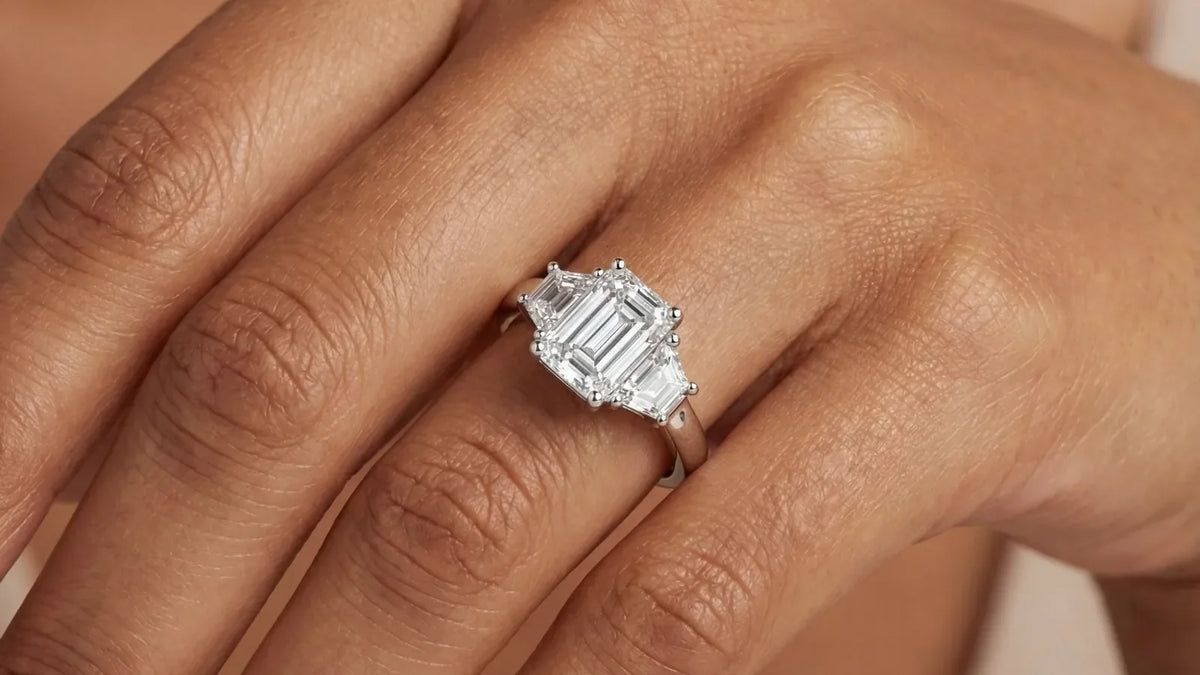
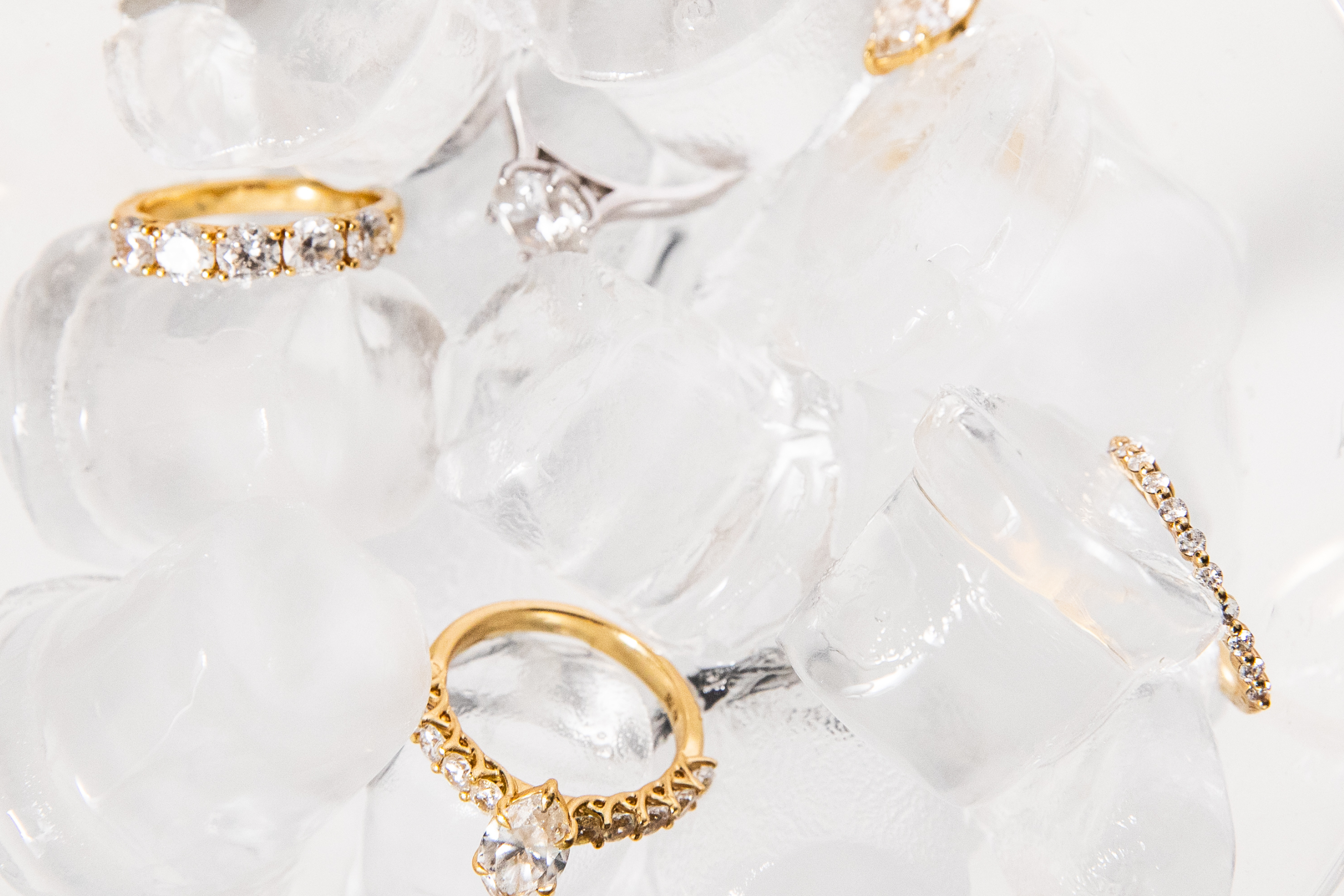
Most couples shopping for an engagement ring come in already torn between white gold and platinum. The two metals look almost identical in the hand, though the price difference can be significant. The advice online tends to land in the same place: they're both great, choose what feels right.
At Diamond Lab Boutique, we have a different view. The white gold vs platinum decision is not really a choice between two equal options. It is a choice between two metals that behave very differently over a lifetime of wear, and there is a hidden cost most jewellers won't mention upfront. Once you understand what each metal actually is, how it ages, and what it costs to maintain, the decision usually becomes clearer.
This guide walks you through the real differences to consider: composition, the ongoing cost of rhodium plating, durability, how each metal sits against different skin undertones, and which one suits which type of buyer. By the end, you'll know which metal makes sense for your ring, your lifestyle, and your budget.
The Short Version
- — White gold is plated to look white. Platinum is naturally white.
- — White gold needs rhodium replating every 6 to 12 months. Platinum never does.
- — White gold is cheaper to buy. Platinum is often cheaper to own over decades.
- — The right metal depends on your budget, your skin undertone, and how much upkeep you want.
What's the Real Difference Between White Gold and Platinum?
The first thing to understand is that white gold isn't naturally white.
Pure gold is yellow. To create white gold, gold is alloyed with other white metals (commonly palladium, silver, nickel, or zinc) to lighten the colour. Even after alloying, the result still has a faint warm or grey tint. To achieve the bright, mirror-white finish people associate with white gold, the ring is plated with rhodium, a rare, hard white metal from the platinum group that gives the surface its reflective brilliance.
Platinum is a different story. It is a naturally white metal mined in its own right, used in fine jewellery at around 95% purity (commonly stamped Pt950). It does not need to be plated or treated to look white. The white you see on a new platinum ring is the same white you'll see decades later, just slightly softer once the surface develops its natural patina.
That single difference, one metal is plated to look white and the other simply is white, sits underneath every other comparison that follows.
The Hidden Cost of White Gold No One Explains
Worth Knowing
Rhodium plating doesn't last forever. On an everyday engagement ring, it typically needs redoing every 6 to 12 months, a recurring cost that platinum buyers never carry.
The plating on a white gold ring is a microscopically thin layer applied over the alloy underneath. With daily wear, from washing hands and knocking against surfaces to contact with chemicals and friction from gloves or gym work, the rhodium gradually wears away. As it does, the warmer or greyer alloy underneath starts to show through, usually first on the underside of the band or around the prongs.
The exact interval depends on how the ring is worn. Office work and light wear sit closer to the 12-month end. Hands-on work, regular gym use, frequent hand washing, or gardening can push it closer to 6 months. Each replating involves the ring being cleaned, polished, and re-dipped, with a per-service cost and a few days away from your hand each time. Over decades of daily wear, that recurring cost adds up to a meaningful figure.
Platinum doesn't carry this cost. It will scratch and develop a soft patina over years of wear, but it never needs replating to stay white. When platinum is professionally polished, it returns to looking close to new, and that is a service most buyers only do every few years, if at all.
This is why, at Diamond Lab Boutique, we always offer platinum as an alternative when a client is drawn to a white metal. It is not the cheapest option upfront, but for many buyers it works out as the lower-cost option over time.
Platinum vs White Gold Price: Upfront Cost vs Lifetime Cost
The upfront pricing gap is real. Platinum costs more at the point of purchase for two reasons. First, platinum is significantly denser than gold, which means more raw metal goes into the same ring design. Second, platinum is harder to work with at the bench, so the labour cost of setting and finishing is higher.
For a comparable engagement ring at Diamond Lab Boutique, white gold settings typically start at a lower price point, and platinum settings sit higher. You can see current pricing across both metals in our lab grown diamond engagement ring collection.
White Gold
Cheaper to Buy
A lower starting price makes it easier to put more of the budget into the diamond. The trade-off is a recurring rhodium replating cost that continues for the life of the ring.
Platinum
Cheaper to Own
A higher upfront cost, but no replating ever. For a ring worn daily over decades, platinum often works out as the lower-cost option across its whole lifetime.
The upfront price is only half the picture. To compare the two metals honestly, it helps to factor in the costs that show up later:
- — Rhodium replating over a lifetime. Even at a moderate frequency, replating every 12 months for several decades adds a recurring cost that platinum buyers never carry.
- — Resizing and repair. Both metals can be resized and repaired by a skilled jeweller. Platinum's higher density makes it slightly more demanding to work with, which can show up in repair pricing.
- — Insurance valuations. Platinum pieces are often valued higher on replacement insurance because of the metal's cost. Worth factoring in if you are budgeting for cover.
The honest answer to "platinum vs white gold price?" is this: white gold is cheaper to buy and more expensive to own, while platinum is more expensive to buy and cheaper to own. Which one wins on cost depends on how long you plan to wear the ring, and engagement rings are usually forever, which tips the balance. If you'd like to see the price difference applied to your specific ring design, book a consultation and we'll price both options side by side.
Which Metal Suits Your Skin Undertone?
Metal undertone wedding rings are a search that comes up a lot, and for good reason. The metal sitting against your skin every day will either complement your natural undertones or fight them.
A Quick Way to Check Your Undertone
Vein colour. In natural light, blue or purple veins usually indicate a cool undertone. Green veins usually indicate warm. A mix points to neutral.
Existing jewellery. Cool undertones tend to suit silver, white gold, and platinum. Warm undertones often suit yellow and rose gold.
Sun response. Skin that burns easily and tans slowly tends to skew cool. Skin that tans easily and rarely burns tends to skew warm.
For cool undertones, both white gold and platinum will sit beautifully against the skin. Between the two, platinum has a slightly softer, less reflective white that flatters very fair or pink-toned skin. White gold, with its bright rhodium finish, brings more contrast and visible brightness.
For warm undertones, a white metal can still work, but many people prefer to bring yellow or rose gold into the design. We frequently make two-tone engagement rings that combine yellow gold bands with a white metal setting head for exactly this reason. Our custom design process is built for this kind of detail.
For neutral undertones, most metals will look good, which means the decision then comes down to maintenance preference and cost over time.
Durability, Comfort, and Everyday Wear
Both metals are durable, but they wear differently.
White gold, commonly 9ct or 18ct in Australia, is harder on the surface, which means it resists fine scratching slightly better than platinum at a comparable polish. The trade-off is that when white gold scratches, metal is actually lost. Combined with rhodium plating wearing off, white gold rings show their age through a gradual change in colour and surface finish.
Platinum is softer on the surface, so it picks up fine scratches more readily. The important difference is what happens after. Platinum scratches don't lose metal, they displace it. That is why platinum tends to develop a patina rather than wear thin. Some buyers love the patina because it reads as character and history. Others prefer a high polish and have their platinum re-polished every few years to restore it.
On the finger, platinum feels heavier. Some people love the substantial feel of a platinum band. Others find a 9ct or 18ct white gold band more comfortable for all-day wear, especially if they are new to wearing rings. If weight matters to you, try both on in store before deciding.
Both metals are friendly to most skin types. Pure platinum at 95% purity is one of the safest choices for sensitive or nickel-allergic skin. White gold can also be safe if the alloy is nickel-free, and most modern quality white gold uses palladium-based alloys, but it is worth confirming the alloy composition with your jeweller before buying if you have known sensitivities.
Platinum vs White Gold: Which Is Better for Engagement Rings?
There is no single right answer to white gold vs platinum, but there is a right answer for you. It usually comes down to three things: how much upfront versus lifetime cost matters, how much maintenance you are willing to do, and which metal suits your skin and your design.
Platinum
Choose Platinum If
- — You want a metal that stays white naturally, with no ongoing replating cost.
- — You value long-term simplicity over yearly maintenance.
- — You have a cool or very fair undertone and want the softest white finish.
- — You are sensitive to nickel or other alloy metals.
- — Your budget allows a higher upfront cost for a lower lifetime cost.
White Gold
Choose White Gold If
- — You want the brightest, most reflective white and don't mind replating.
- — The upfront budget is tighter and you would rather spread costs over time.
- — You like mixing white gold with yellow or rose gold in two-tone designs.
- — The lower starting price lets you put more of the budget into the diamond.
At Diamond Lab Boutique, we walk every client through this comparison in store. There is no better metal in the abstract. There is the metal that suits your skin, your lifestyle, your maintenance preferences, and your budget. Book a consultation and we'll show you both side by side, in your hand, with the diamond shape and setting you are considering.
Frequently Asked Questions
Is platinum worth the extra cost over white gold?
For many buyers, yes, once the lifetime cost is factored in. Platinum costs more upfront but doesn't need rhodium replating every 6 to 12 months, which is a recurring cost that white gold carries for the life of the ring. If you plan to wear the ring daily for decades, platinum often works out cheaper overall. If the ring will be worn occasionally or you don't mind the maintenance, white gold can be a better value.
How often does white gold need to be rhodium plated?
Most jewellers recommend replating an everyday-wear white gold ring every 6 to 12 months. The exact frequency depends on how the ring is worn. Office-based wear with limited chemical exposure can stretch to 12 months. Active hands-on wear, frequent hand washing, gym use, or contact with chlorine and household chemicals usually shortens the interval to closer to 6 months.
Does platinum scratch more easily than white gold?
Yes, platinum is softer on the surface and will pick up fine scratches more readily than 18ct white gold. The important difference is what happens next. White gold scratches lose metal. Platinum scratches displace metal, which means platinum develops a patina rather than wearing thin. A professional polish restores either metal, but platinum holds its mass over decades far better than white gold.
Can I have a two-tone ring with both white gold and platinum?
It is uncommon to combine white gold and platinum in the same ring because the colours and finishes age differently. The more common two-tone combination is yellow or rose gold paired with a white metal, either white gold or platinum, used for the setting head. At Diamond Lab Boutique, we design two-tone engagement rings regularly through our custom design process and can talk you through what works.
What is the best metal for sensitive skin?
Platinum at 95% purity is one of the safest choices for sensitive or nickel-allergic skin. Pure platinum doesn't contain the alloy metals that commonly trigger reactions. White gold can also be safe if the alloy is nickel-free, and most modern quality white gold uses palladium-based alloys, but it is worth confirming the alloy composition with your jeweller before buying if you have known sensitivities.
Ready to See Both Metals on Your Hand?
The honest answer to white gold vs platinum is that they are both good metals, but they suit different buyers. White gold gives you a brighter white finish at a lower starting price, with ongoing replating to keep it looking new. Platinum costs more upfront, stays naturally white for life, and tends to work out as the lower-cost option over decades of wear.
The fastest way to make this decision well is to see both on your finger, with the diamond and setting you are considering, and feel the difference in weight, colour, and finish. Our team walks every client through this comparison without pushing one option over another. Browse our lab grown diamond engagement ring collection, explore our custom design process, or book an appointment at our Westfield Chermside showroom in Brisbane.
Find the Metal That Fits Your Life
See white gold and platinum side by side, or book a consultation at our Chermside showroom.