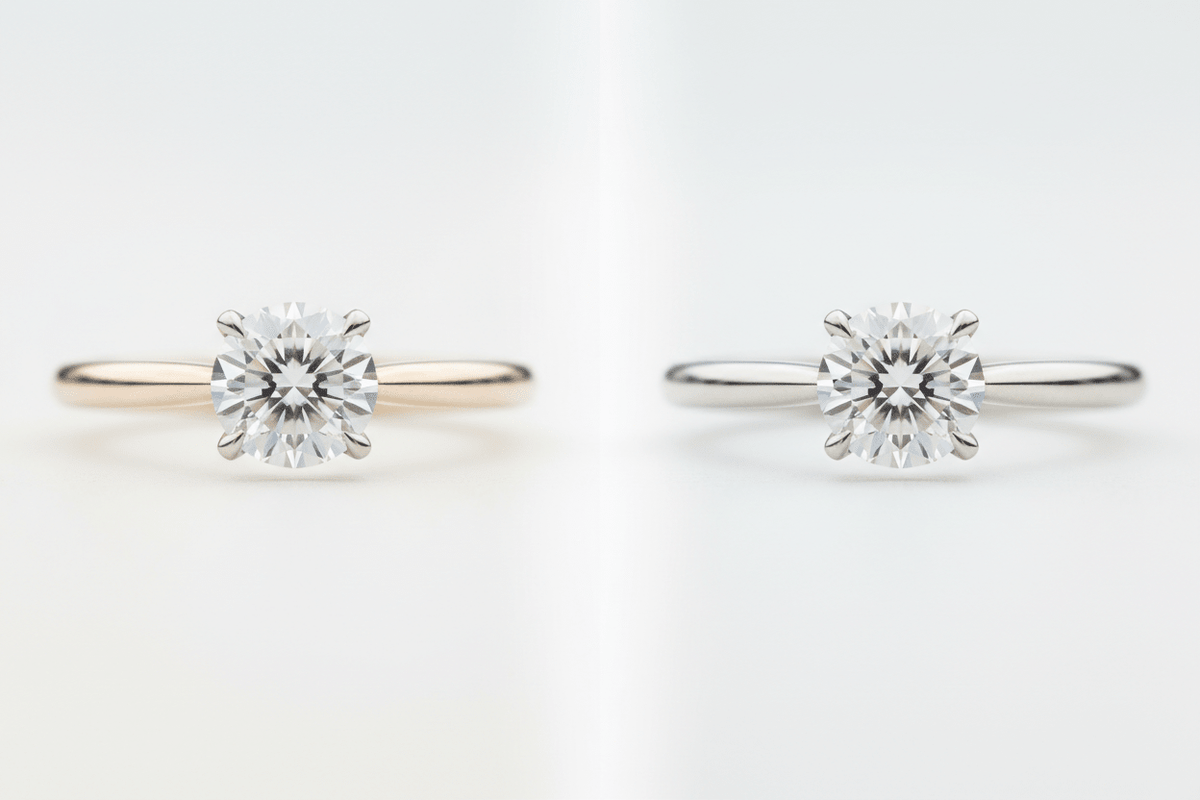
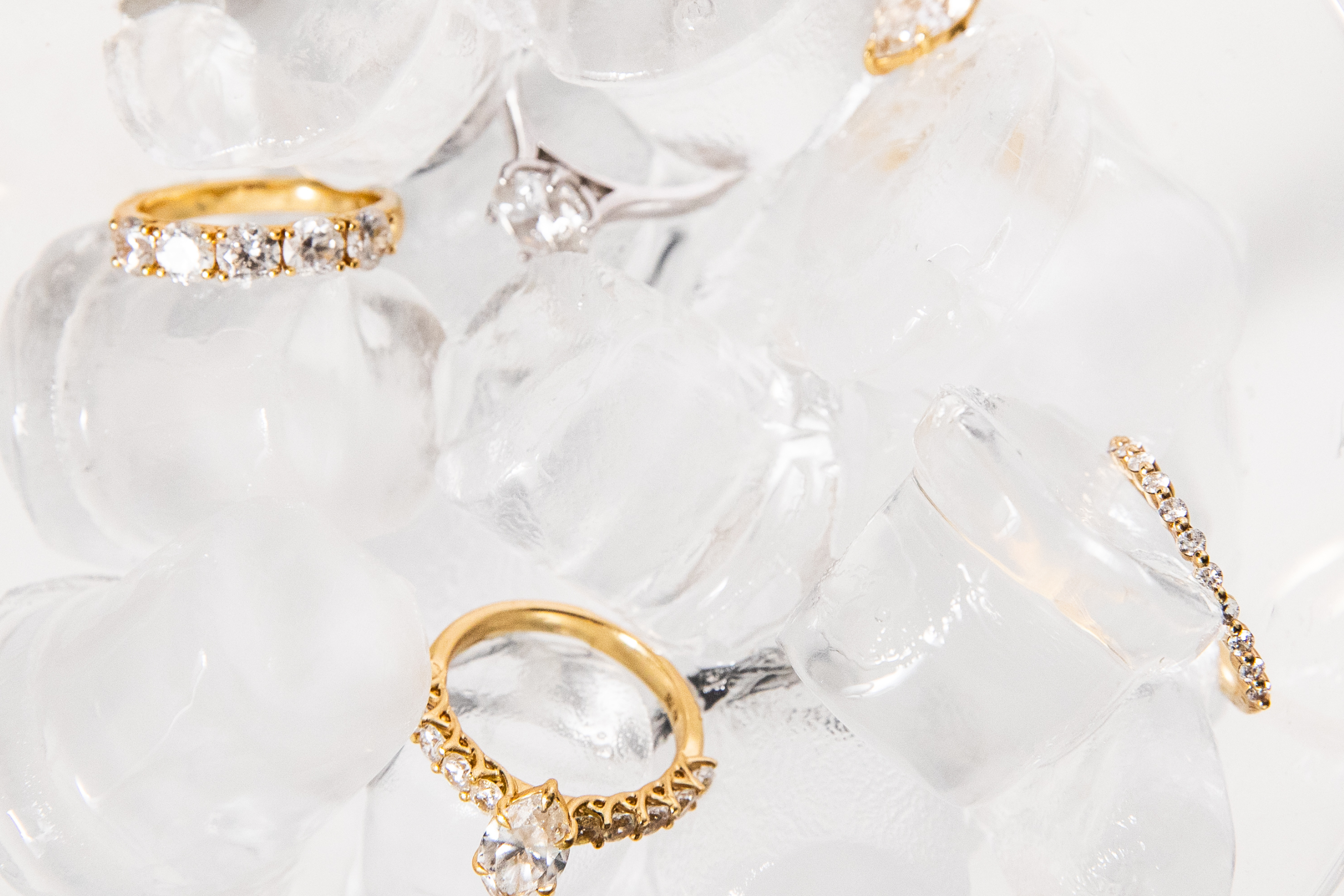
If you've been looking at diamond jewellery recently, you've probably come across the term lab grown diamond more than once. It comes up in engagement ring conversations, fine jewellery collections, pendant searches. But the question most people quietly carry is a simple one: how are lab grown diamonds actually made, and are they the real thing?
The short answer is yes. Lab grown diamonds are real diamonds. They share the same chemical composition, the same crystal structure, and the same physical and optical properties as diamonds pulled from the earth. The only difference is where they come from.
This guide walks through exactly how lab grown diamonds are created, what they're made of at a material level, the two main production methods, and what any of that means when you're choosing a piece to wear or give. Whether you've heard them called lab cultured diamonds, lab created, or man-made, they all refer to the same stone.
What Are Lab Grown Diamonds, and What Are They Made Of?
Lab grown diamonds are created from pure carbon atoms arranged in the same diamond cubic crystal lattice as a mined diamond. That crystal structure is what gives a diamond its defining properties: a Mohs hardness rating of 10, the highest on the scale, an extraordinary refractive index, exceptional thermal conductivity, and the brilliant light return that makes the stone unmistakable.
This is worth stating clearly, because lab grown diamonds are often confused with diamond simulants. Cubic zirconia and moissanite are not diamonds. They may look similar at a glance, but they are different materials with different properties. A lab grown diamond is not a simulant. It is a diamond.
You will also encounter a few different terms for the same stone. Lab grown, lab created, laboratory-grown, man-made, and lab cultured diamonds all refer to the same thing. "Lab cultured" borrows the language used in the pearl industry, where cultured pearls are grown in managed conditions rather than harvested from the wild. The principle is similar: a real material, produced through a controlled process rather than chance and geological time.
What makes a lab grown diamond chemically identical to a natural one is carbon. Diamonds form when carbon atoms bond under extreme conditions. Underground, that process takes hundreds of millions of years. In a lab, it takes weeks to months depending on the method. The result is the same: carbon bonded in a tetrahedral crystal structure, which is what creates a diamond's hardness and brilliance.
There are two methods used to grow gem-quality lab diamonds today: HPHT (High Pressure High Temperature) and CVD (Chemical Vapour Deposition). Both start with a diamond seed crystal and build from there. You can read more about the properties of both lab grown and natural diamonds on our lab grown diamond education page.
The HPHT Method: Replicating the Earth's Mantle
HPHT stands for High Pressure High Temperature. It is the older of the two methods, developed commercially in the mid-twentieth century once scientists understood the conditions under which natural diamonds form deep in the Earth's mantle.
Natural diamonds grow at depths of around 150 kilometres or more, under pressures of roughly 45 to 60 kilobars and temperatures between 900 and 1,300 degrees Celsius. HPHT reproduces those conditions inside a controlled chamber.
Here is how it works. A small diamond seed crystal is placed inside a growth chamber along with a carbon source, typically graphite or another carbon-rich material, and a metal catalyst. The chamber is subjected to extreme pressure, around 5 to 6 gigapascals, and temperatures above 1,300 degrees Celsius. Under those conditions, the carbon source dissolves and migrates toward the seed crystal, bonding to it and growing a larger diamond outward from that starting point.
HPHT growth chambers come in a few different engineering configurations, but the chemistry is the same across all of them: extreme heat, extreme pressure, and carbon crystallising onto a seed.
HPHT diamonds are available in a range of colours. Without additional treatment, they can come out colourless to near-colourless, or with a yellowish tinge depending on the nitrogen content during growth. Many HPHT stones are treated after growth to achieve a higher colour grade. The method is well-proven and produces high-quality diamonds across a range of sizes and shapes.
The CVD Method: Building Diamonds Layer by Layer
CVD stands for Chemical Vapour Deposition. It is a newer approach and has become the more widely used method for gem-quality lab grown diamonds because it offers greater control over the growth process.
Where HPHT mimics the high-pressure conditions inside the Earth, CVD works at much lower pressures. Instead of forcing carbon onto a seed under extreme heat, CVD feeds it in as a gas.
Here is how it works. A thin diamond seed crystal is placed on a substrate inside a sealed chamber. The chamber is filled with a carbon-rich gas, most commonly a mixture of methane and hydrogen. An energy source, typically microwave plasma, is then activated. The energy ionises the gas molecules, breaking them apart and releasing carbon atoms. Those carbon atoms settle onto the seed crystal and bond to it, building the diamond layer by layer from the bottom up.
Because the process runs at lower pressures, CVD chambers can produce crystal growth across larger surface areas, which is useful for growing bigger stones. CVD also tends to produce naturally colourless to near-colourless diamonds, which makes it a popular choice for gem-quality stones used in fine jewellery.
Once the rough crystal reaches the desired size, it comes out of the chamber and is processed the same way as any mined rough diamond: cut, shaped, faceted, and polished by a diamantaire. The process of turning rough into a finished stone is identical whether the crystal grew underground or in a lab.
Both HPHT and CVD produce diamonds that are optically and chemically the same as a stone pulled from the earth.
How Lab Grown Diamonds Are Graded
Lab grown diamonds are assessed using the same grading system as natural diamonds: the 4Cs. Cut, colour, clarity, and carat weight. The same criteria, the same scales, the same independent laboratories.
The two most recognised bodies for grading lab grown diamonds are the Gemological Institute of America (GIA) and the International Gemological Institute (IGI). A grading report from either body will document the stone's cut grade, colour grade on the D-to-Z scale, clarity grade, carat weight, and confirm that the diamond is lab grown along with which method produced it. Our ready-to-wear engagement rings at Diamond Lab Boutique each carry a GIA grading report on the centre stone.
When you are shopping for any lab grown diamond piece, a few things are worth keeping in mind:
- — Cut matters most for brilliance. A well-cut diamond returns more light than a poorly cut stone regardless of its colour or clarity grade.
- — Colour on lab grown diamonds is often excellent, and the price difference between colour grades tends to be smaller than it is with natural stones.
- — Clarity in lab grown diamonds is frequently very good. Because growth conditions are controlled, fewer inclusions tend to form than in natural stones produced over millions of years.
- — Certification gives you documented confidence in what you are buying. Not every lab grown diamond comes with a grading report, particularly at lower price points, but for a significant purchase it is worth asking whether the stone has been independently assessed.
The 4Cs and a trusted grading certificate are your two best tools when choosing any diamond, lab grown or natural.
Lab Grown vs. Mined Diamonds: What Actually Changes?
Given that the material is chemically and physically the same, the real differences between lab grown and mined diamonds come down to a handful of practical things.
01
Price
Lab grown diamonds are available at significantly lower prices per carat than mined diamonds of comparable quality. That gap is substantial enough that many buyers find they can choose a larger stone or a more intricate setting without changing their budget. It does not reflect a difference in quality. It reflects a difference in production cost and supply.
02
Origin
A mined diamond formed over hundreds of millions to billions of years in the Earth's mantle, brought to the surface through volcanic activity, then mined and cut. A lab grown diamond formed in a controlled environment over weeks to months. If the geological origin of a stone matters to you personally, that is worth thinking through. For many buyers it does not, and the optical result is indistinguishable either way.
03
Availability
Lab grown diamonds can be produced consistently in specific sizes, cuts, and colour grades. That gives jewellers and custom designers more flexibility when sourcing stones for a particular design.
04
What Stays the Same
Hardness. Brilliance. Durability. The way the stone responds to light. How it sits in a setting. How it looks when worn. All of that is the same, because the material is the same.
The practical choice often comes down to what a buyer values more: the geological history of the stone, or the stone itself.
Frequently Asked Questions
How long does it take to grow a lab grown diamond?
Both HPHT and CVD grow a diamond crystal over weeks to months, depending on the size and the manufacturer's process. Once the rough crystal is complete, it still needs to be cut, shaped, and polished, which adds further time. The full journey from seed to finished stone can take several months. Growth time is not a guide to quality. A slowly grown stone is not necessarily better than a faster one.
What is the difference between HPHT and CVD diamonds?
HPHT replicates the extreme pressure and heat conditions found deep in the Earth's mantle. CVD uses a carbon-rich gas and microwave plasma to deposit carbon atoms onto a seed crystal at much lower pressures. Both produce chemically identical diamonds. CVD has become more common for gem-quality stones because it offers greater control over the growth process and tends to produce naturally colourless results without post-growth treatment.
What is a lab cultured diamond?
Lab cultured is simply another term for a lab grown diamond. Like lab created, man-made, and laboratory-grown, it refers to a diamond produced in a controlled environment rather than mined from the earth. The term borrows from the pearl industry, where cultivated pearls are grown in managed conditions. All of these terms describe a real diamond with the same chemical and physical properties as a mined stone.
Can you tell a lab grown diamond from a mined diamond just by looking?
No. Lab grown diamonds and mined diamonds are visually identical. Even experienced gemmologists cannot distinguish them with the naked eye. Specialised equipment that analyses growth patterns, such as spectroscopy, can determine the origin. But for all practical purposes, including wearing, viewing, and how a stone is set and sold, there is no visible difference.
Can I have a custom piece made with a lab grown diamond?
Yes. Lab grown diamonds can be set in any design, from simple solitaire sliders to fully custom pieces built around a specific stone. At Diamond Lab Boutique, our team designs and makes custom jewellery in house, from CAD design through casting to expert stone setting, so you can choose your diamond and have a piece made exactly to your brief. Book a consultation at our Chermside showroom to start the conversation.
Ready to Find Your Lab Grown Diamond?
How lab grown diamonds are made is a genuinely interesting story: carbon atoms forced into a crystal lattice through extreme conditions, replicating in days or weeks what the earth takes millions of years to produce. But for most buyers, the process is a starting point, not the end of the conversation.
What matters more is what you end up with. A stone that is chemically, optically and physically identical to a mined diamond. Graded on the same 4Cs. Set by the same craftspeople. Worn the same way.
At Diamond Lab Boutique, we work with lab grown diamonds across our whole jewellery range, from lab grown diamond necklaces and earrings to custom-designed engagement rings. Our team has more than 30 years of experience in the industry, and we handle every step in house, from CAD design to casting to stone setting. If you are researching a lab grown diamond purchase and want to see stones in person, we are happy to walk you through what we have.
Browse our collection online, explore our custom design process, or book an appointment at our Westfield Chermside showroom in Brisbane.
Find Your Lab Grown Diamond
Browse our collection online or book an appointment at our Chermside showroom.