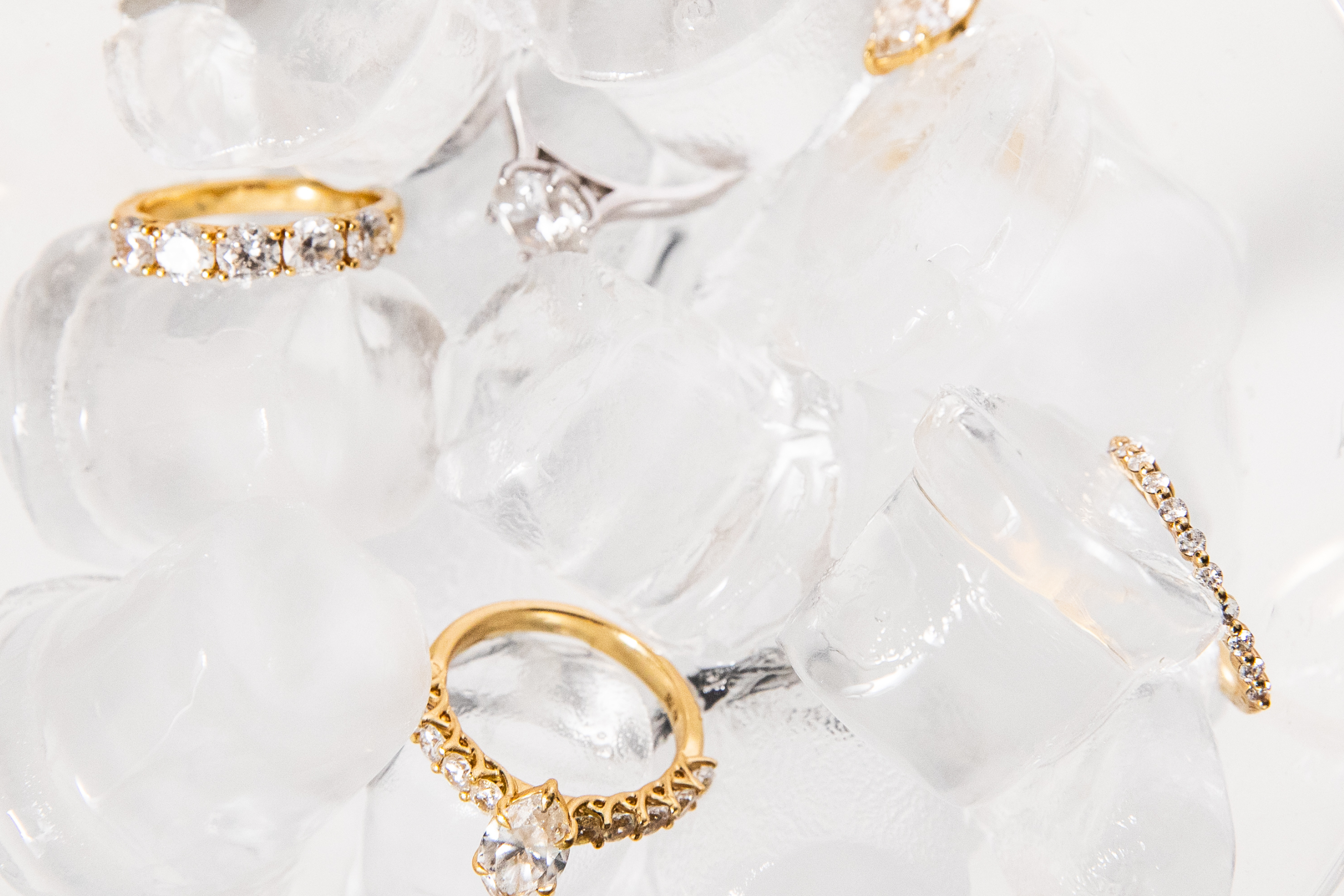
At Diamond Lab Boutique, we guide clients through this comparison every day. Some arrive certain they want natural diamonds because they value age, rarity, and the story of something precious formed beneath the Earth. Others are drawn to lab-grown diamonds because they want a larger stone, more flexibility in carat weight, or a choice that feels more aligned with their values around environmental impact and sustainable practices.
Both options are real diamonds. Both can be beautiful, durable, graded, and worn as symbols of your everlasting love. The real difference is not whether one is "real" and the other is not — it is how they are created, how they are valued in the market, and what each option means to you.
What's the main difference between lab-grown and natural diamonds?
The main difference is their origin. Natural diamonds are formed beneath the Earth's crust under intense heat and high pressure over billions of years. These natural stones are brought to the surface through geological activity, then mined, cut, polished, graded, and set into jewellery. Their rarity is a major part of their appeal — that long natural formation story adds emotional and symbolic value.
Lab-grown diamonds — also known as laboratory-grown, lab-created, or man-made diamonds — are created in a controlled laboratory using advanced technology. They are made from carbon atoms, just like mined diamonds, and develop with the same optical properties, brilliance, and durability as their natural counterparts.
There are two main production methods:
Method 01
HPHT
High Pressure High Temperature — replicates the intense heat and pressure conditions found deep within the Earth.
Method 02
CVD
Chemical Vapour Deposition — a diamond seed is placed in a vacuum chamber and carbon-rich gases grow the diamond layer by layer.
With the same budget, many buyers can choose a significantly larger or higher-quality lab-grown stone than they could when shopping for natural diamonds. Lab-grown diamonds are typically 30–70% less expensive per carat than comparable natural diamonds.
At the same time, natural diamonds continue to hold appeal for buyers who value inherent rarity, a longer geological story, and often a stronger perception of long-term resale value.
Are lab-grown diamonds real?
Yes. They are not imitations in the way cubic zirconia or other synthetic substitutes are. Lab-grown diamonds are chemically, optically, and physically identical to mined diamonds. Both are made from carbon atoms arranged in the same crystal structure, both are durable, both display exceptional brilliance, and both are graded using the same four Cs.
The Federal Trade Commission recognises laboratory-grown diamonds as real diamonds, provided they are properly described. This means transparency matters — a reputable jeweller should clearly explain whether a stone is laboratory-grown or natural, and a proper grading report should reflect that too.
Can you tell the difference between a lab-grown and natural diamond?
To the naked eye, no. In a showroom, side by side, lab-grown and natural diamonds can look identical. Their brilliance, colour, polish, and overall appearance are virtually indistinguishable without specialised equipment — because their optical properties are fundamentally the same.
Only trained gemologists using advanced instruments can usually tell them apart, by checking growth patterns, trace elements, or laser inscription details linked to certification and origin disclosure.
In practice, the decision usually comes back to values: Are you drawn to a stone that formed naturally over immense time, or are you more interested in size, affordability, and a modern approach to fine jewellery?
Authenticity and Market Value
Are lab-grown diamonds certified?
Absolutely — when you purchase from a jeweller you trust, they should be. Lab-grown diamonds are certified by respected organisations such as the Gemological Institute of America (GIA) and IGI. A proper grading report confirms the stone's characteristics, verifies authenticity, and notes whether it is laboratory-grown.
Certification has become one of the most important trust signals in the market. Always ask to see the grading report — whether you are looking at lab-grown or natural diamonds, certification gives you a clear basis for comparison and helps you buy with confidence.
How are diamonds graded — the Four Cs
Both natural and lab-grown diamonds are assessed using the same four criteria:
For natural diamonds, grading also includes polish, symmetry, fluorescence, and a laser inscription number. No two natural diamonds are exactly alike — each stone has its own individual character.
For lab-grown diamonds, the grading report will also state whether the stone was created through CVD or HPHT, and confirm it is laboratory-grown. Not every lab-grown stone is equal — proper certification helps buyers compare options and avoid decisions based on price alone.
Ethics, sustainability, and the wider diamond industry
Lab-grown diamonds are often seen as a more sustainable option because they avoid the large-scale excavation associated with diamond mining. They are also frequently described as conflict-free, which appeals to buyers concerned about blood diamonds, conflict diamonds, and human rights issues in parts of the diamond industry.
That said, the conversation is more nuanced. Natural diamond mining supports local communities and millions of jobs in developing economies, even as the industry has faced serious criticism in some regions for links to labour abuses and environmental degradation. The Kimberley Process was introduced to reduce the trade in conflict diamonds, but many buyers still want to ask deeper questions about sourcing and ethics.
Lab-grown diamonds can reduce concerns around mining and excavation — but laboratory production also uses significant energy. If that energy does not come from renewable sources, the environmental impact can still be meaningful.
Which should you choose?
Choose Natural If…
Rarity & Origin Matter
You value the romance of a stone shaped by the Earth over billions of years, and want something with a strong perception of long-term resale value.
Choose Lab-Grown If…
Size & Value Matter
You want to maximise carat size or find a more affordable option with the same beauty and durability, without stretching your budget.
At Diamond Lab Boutique, we believe the right stone is the one that matches your priorities with honesty and confidence. The best consult is not about pushing one option over another — it is about helping you understand the real difference and choose a diamond that feels right for your life, your jewellery, and your values.
Book a Consultation
Speak with one of our experts and find the diamond that's right for you.
Book a Consult