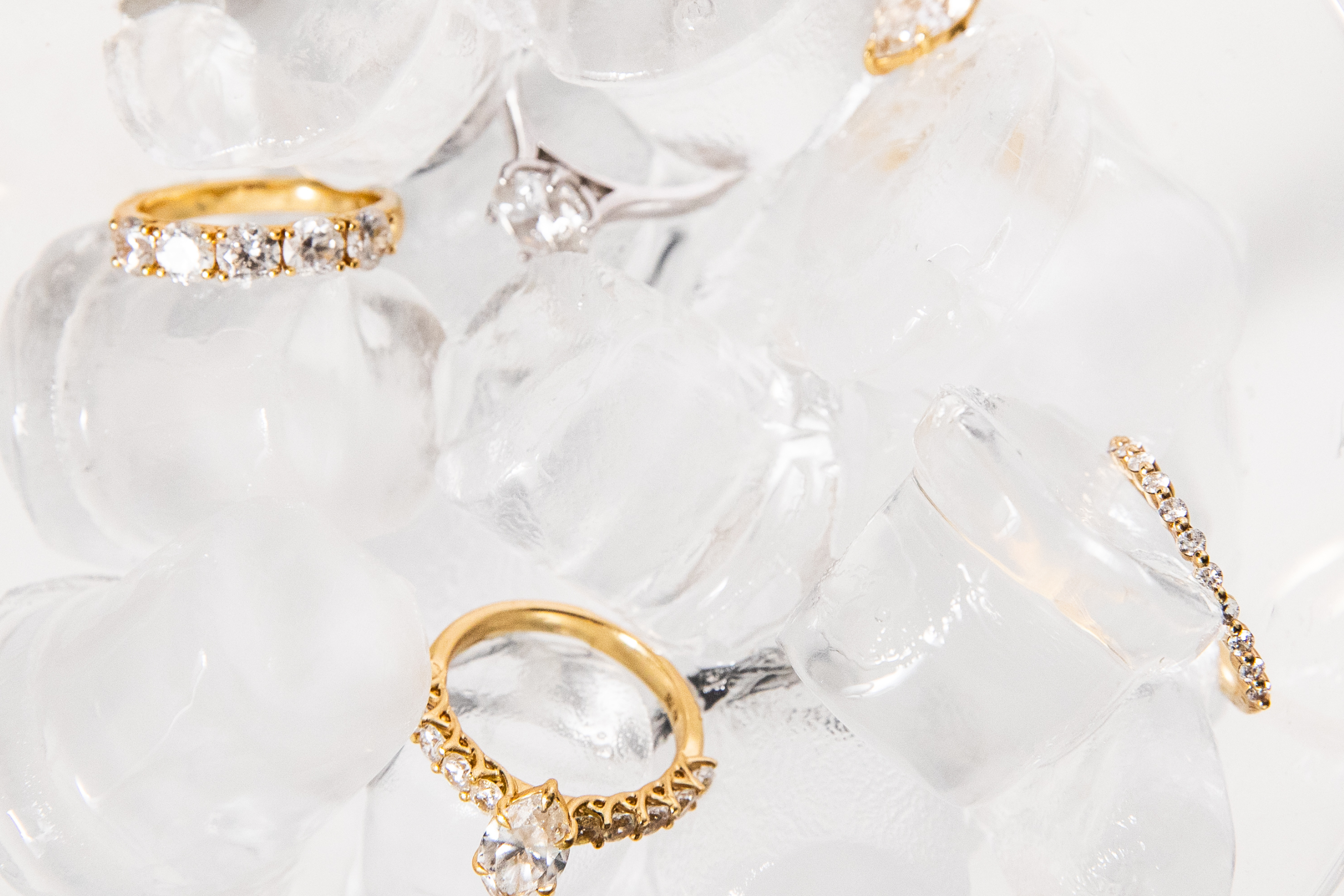
Luxury should reflect your values. At Diamond Lab Boutique, our lab grown diamonds in Brisbane pair breathtaking beauty with ethical integrity, so you never have to choose between the two. Every stone in our collection is hand-selected to meet the highest standards of cut, clarity, brilliance and craftsmanship. Visit our Chermside showroom to see them in person, or shop online with delivery Australia-wide. Each diamond is fully certified and graded, giving you the radiance and durability of a mined stone with the peace of mind of an ethical choice.

What are Lab Grown Diamonds?

Lab grown diamonds are real diamonds. Chemically, physically and optically identical to mined stones, they form through the same crystal structure, just in a controlled environment rather than deep in the earth. To the eye, and under a jeweller’s loupe, there is no visible difference. What changes is the origin.

Lab grown diamonds give you the chance to explore larger sizes, distinctive shapes and fully custom designs while holding to the same standards of quality and sustainability. Our diamonds are hand-picked by our Chief Gemstone Expert alongside our Co-Founders, so every stone earns its place on cut, clarity and sparkle.

Why Choose Lab Grown Diamonds?

A lab grown diamond carries no mining footprint, which matters if you want your jewellery to reflect your values.

The value is practical too. Because lab grown stones cost less per carat than mined equivalents, your budget stretches further, whether that means a larger centre stone, a higher clarity grade or a more detailed setting. At Diamond Lab Boutique, we work with you at every step, from hand-selecting your stone to crafting your custom piece, so the result is ethically made, endlessly brilliant and entirely yours.

Diamond on yellow background

Understanding the 4Cs

The 4Cs, cut, colour, clarity and carat, are the standard measures of a diamond’s quality. Knowing what each one does helps you spend your budget where it shows.

Cut Of Diamond

4C's Of Diamonds

Cut Of Diamond

The cut of a diamond refers not to its shape, but to the balance of proportion, symmetry and polish achieved by the diamond cutter. The extent of how well the diamond is cut is directly related to the diamond’s overall beauty. When a diamond has been correctly cut, the diamond’s ability to reflect and refract light is greatly enhanced. By understanding the way that light moves through diamond crystals, modern diamond cutters have established a specific set of proportions and angles that are known to harness the diamond’s internal brilliance and to show it in its best light.

Ideal Cut

An Ideal Cut Diamond is a round, brilliant, or princess cut diamond that is cut to ideal proportions and angles, and has excellent polish and symmetry ratings. An Ideal Cut Diamond is perfectly proportioned to refract light, producing that fire and brilliance up through to the table and crown. Belgium Webnet offers a nice selection of Ideal Cut Diamonds know at True HeartsTM

Colour chart of diamond

4C's of Diamonds

Colour

Colour refers to the natural body colour of a diamond and not to the reflection of spectral colours that flash when a diamond moves. Most diamonds naturally exhibit slight hints of yellow, brown, or gray. This colour is caused by natural trace elements of nitrogen that were present when the diamond formed under the Earth’s crust. The less colour a diamond exhibits, the higher the rarity, and therefore the higher the value.

Diamond Color

Colour of a diamond is a result of diamond’s composition and does not change with time. Colourless diamonds allow light to travel through them as compared to the coloured diamonds. These diamonds also emit more fire and sparkle. The process, through which a diamond is formed, is the deciding factor for its colour. The whiter the diamond is the higher value it will have. For grading the colour of diamonds, jewellers refer to GIA’s colour scale that starts the rating with D for the colourless diamonds and grows up to Z as the traces of light yellow or brown colour are found in the diamond. Diamonds graded from D to F are amongst the most desirable and valuable stones. These diamonds are a delight for the diamond lovers. Nevertheless, if you have a low budget, you can also find good diamonds with lower grades. These diamonds are not exactly colorless but show no color to untrained eye

Carat chart

4C'a of Diamonds

Carat

Carat (ct.) refers to the unique unit of weight measurement used exclusively to weigh gems and diamonds. Carat weight is often confused with visual size even though it is actually a measurement of weight. Depending on the shape and type of gemstone being weighed, the weight will visually show itself differently. For example, a 1.00 ct. round diamond will measure around 6.5mm, and a 1.00 ct. round sapphire will measure around 6.0mm. This is due to the varying density of different gemstones.

Carat Weight

Diamond clarity means finding out characteristics of a diamond, including the blemishes and inclusions. If you consider the pressure that a diamond is created, and that they are not produced in sterile laboratory, you will be not be surprised to find that most of these diamonds are not free of flaws. Usually there are two kinds of flaws found in diamonds – blemishes and inclusions. Inclusions are naturally occurring internal flaws that are found in diamonds including cracks, air bubbles, and mineral. However, most blemishes occur at the time of cutting process.

Clarity

4C's of Diamonds

Clarity

Clarity refers to how clean or clear the diamond is with respect to natural microscopic characteristics that were trapped within or on the diamond while it was forming. Internal characteristics are known as inclusions, and characteristics on the surface of the gem are known as blemishes. Inclusions may be crystals of a foreign material or structural imperfections such as tiny cracks, known as feathers, which can appear whitish or cloudy.

Diamond Clarity

Diamond clarity means finding out characteristics of a diamond, including the blemishes and inclusions. If you consider the pressure that a diamond is created, and that they are not produced in sterile laboratory, you will be not be surprised to find that most of these diamonds are not free of flaws. Usually there are two kinds of flaws found in diamonds – blemishes and inclusions. Inclusions are naturally occurring internal flaws that are found in diamonds including cracks, air bubbles, and mineral. However, most blemishes occur at the time of cutting process.

Shape of Diamonds

Asscher Diamonds

Asscher Diamonds

The asscher cut features a square shape with cut corners. A high crown with large step cut facets bestows more brilliance than the other popular step cut shape, the emerald shape. Asscher shaped diamonds are sleek and modern in solitaire settings, and their unique shape perfectly complements vintage-inspired styles.

Round Diamonds

Round Diamonds

Diamond shape refers to a diamond’s physical form, and is often one of the first attributes that couples consider when shopping for a diamond. While round diamonds are the most popular choice, many couples are also drawn to the distinctive look of non-round, or “fancy shaped” diamonds.

Princess Diamonds

Princess Diamonds

Princess cut diamonds are the second most popular diamond shape. Princess cut diamonds possess the gorgeous sparkle of round brilliant diamonds in a distinctive square shape. They offer a contemporary look and the flexibility to work in almost any style of ring.

Cushion Diamonds

Cushion Diamonds

Cushion cut diamonds combine the appeal of a square cut diamond but with soft, rounded edges, lending this shape a romantic feel. This timeless shape is derived from the old mine cut, and has been refined over hundreds of years. Cushion cut diamonds are a beautiful choice for any setting style.

Emerald Diamonds

Emerald Diamonds

Emerald cut diamonds are treasured for their elegant silhouette. The shallow pavilion and crown accentuate the clarity of the stone, while the reflective steps enhance the color and luster of the diamond

Pear Diamonds

Pear Diamonds

Pear shapes feature a rounded edge tapering to a point at the opposite end. This unique shape flatters fingers and offers a distinctive look. A fusion of the marquise shape and the most popular round brilliant cut, pear shaped diamonds are intended to showcase the sparkle of the diamond, making it important to find a stone with great symmetry.

Radiant Diamonds

Radiant Diamonds

The radiant cut diamond combines the silhouette of an emerald cut diamond with the fire and sparkle of a round brilliant cut diamond. Due to its design, this shape requires more carat weight in the depth to maximize brilliance.

Oval Diamonds

Oval Diamonds

The ever-flattering oval shape is symmetrical and exhibits a similar fire and brilliance to round shaped diamonds. A scintillating twist on the classic round brilliant, the elongated shape can create the illusion of larger size. Oval diamonds are highly versatile, remarkably elegant, and distinctive.

Heart Diamonds

Heart Diamonds

The heart shaped diamond is an evocative signifier of true love. They shimmer with two symmetrical halves, creating a bold and romantic look. Heart shaped diamonds are especially popular in Claddagh designs, and offer a distinctive look in any engagement ring setting.

Marquise Diamonds

Marquise Diamonds

The marquise shaped diamond features pointed ends with a curved middle for an eye-catching look. With a larger surface area than any other diamond shape, the marquise shape maximizes perceived size and lends a unique look to any setting style.

Explore the full range in our lab grown rings collection or start with our Ring Builder.

The Diamond Anatomy

The Diamond Anatomy

A diamond is made up of two key sections, the Crown and the Pavilion. Their structure and relationship to each other in the form of table and depth percentages have the biggest impact on the diamond’s sparkle.

The round brilliant cut has been used as an example, because with most other diamond shapes (“fancy cut” diamonds) the cut grading is more complicated (hence why their cut grading does not appear on certificates such as GIA).

Caring for Your Diamond Jewellery

With a little care, your diamond jewellery keeps its sparkle for a lifetime. For prong and cathedral settings, soak the piece for a few minutes in warm water with a little mild dish soap, then gently clean the metal with a soft cloth or cotton swab and rinse. Take more care with pave and basket settings, where a long soak can loosen the smaller stones. When in doubt, keep the soak short and bring your piece in to us for a professional clean.

Visit Our Chermside Showroom

You’ll find us at Westfield Chermside, on Gympie Road in Brisbane’s north. The showroom is the best way to experience lab grown diamonds, seeing the cut, colour and sparkle in person before you decide. We welcome couples and clients from across Brisbane, including the northside suburbs of Chermside, Aspley, Kedron, Nundah and Stafford, and the wider metro area.

If you can’t make it in, we deliver Australia-wide, so clients anywhere in the country can own a Diamond Lab Boutique piece. Book an appointment, and we’ll set aside time to walk you through your options.

Why Choose Diamond Lab Boutique

Diamond Lab Boutique brings more than 30 years of experience in the jewellery industry to every piece. We handle the whole process in-house, from CAD design to casting and expert stone setting, which means we control the quality at every stage. Our diamonds are hand-selected by our Chief Gemstone Expert and Co-Founders, and every stone is fully certified and graded. Whether you’re choosing a ready-to-wear piece or designing something one of a kind, our team takes the time to understand your story so the finished piece is truly yours.

Frequently Asked Questions

Yes. Lab grown diamonds are chemically, physically and optically identical to mined diamonds. They have the same hardness, brilliance and fire, and they are graded on the same 4Cs. The only difference is how they form: in a controlled environment rather than deep in the earth. Under a jeweller’s loupe, there is no visible difference between a lab grown and a mined diamond of the same quality.

Lab grown diamonds generally cost less per carat than mined diamonds of the same size and quality, so your budget goes further. The final price depends on the 4Cs, the setting and the metal you choose. The best way to get an accurate quote is to book an appointment at our Chermside showroom, where we can show you options across a range of budgets.

Every lab grown diamond in our collection is fully certified and graded, so you know exactly what you’re buying across cut, colour, clarity and carat. Certification gives you an independent record of your diamond’s quality and is worth keeping for insurance. We’re happy to talk you through your diamond’s grading report when you visit or when your piece is delivered.

Yes. Custom design is one of our specialities. We handle CAD design, casting and stone setting in-house, so we can bring your idea to life from first sketch to finished piece. Lab grown diamonds make custom work more accessible, since your budget can stretch to a larger or higher-grade stone. Start with our Ring Builder or book an appointment to design something one of a kind.

Yes. While our showroom is at Westfield Chermside in Brisbane, we deliver Australia-wide, so you can buy a Diamond Lab Boutique piece wherever you are. If you’d like to see options before you commit, get in touch, and we’ll help you choose remotely. For anyone able to visit, we recommend booking an appointment to see the diamonds in person.

diamond Lab boutique

Book your lab grown diamond appointment in Brisbane

Seeing a lab grown diamond in person is the best way to appreciate its brilliance. Visit our Chermside showroom to explore certified, ethically made diamonds across every shape and size, or to start designing a custom piece with our team. If you’re outside Brisbane, we deliver Australia-wide and can help you choose remotely. Whichever way you shop, you’ll get a diamond that’s ethically made, endlessly brilliant and uniquely yours.